
Pediatric Occupational Therapy for Sensory Processing Difficulties
in Winder, GA

Sensory processing difficulties occur when a child’s nervous system has trouble taking in, interpreting, or responding to information from their senses. Everyday experiences like getting dressed, eating meals, or walking into a noisy classroom can feel overwhelming. This is referred to as “sensory processing disorder” or “sensory sensitivities.”
Many parents notice their child reacting strongly to routine experiences like loud noises, bright lights, or certain clothing textures. A shirt tag might feel unbearable, or a noisy classroom may cause them to cover their ears. These reactions can be puzzling for parents, but Let’s Communicate’s occupational therapists use play-based strategies to help children build comfort and confidence.

What Are Sensory Processing Difficulties for Children?
For children with sensory processing difficulties, the brain doesn’t always sort sights, sounds, and textures smoothly. For some children, this looks like overreacting to sensory input like becoming upset by loud noises or refusing certain clothing textures. Others may show the opposite response, underreacting to sensory input by constantly seeking movement, touch, or deep pressure more than their peers. These challenges are not behavioral problems or “bad habits,”they are signs that a child’s sensory system needs extra support to work smoothly.
Signs Your Child May Need Sensory Processing Therapy
Every child is unique, but some common signs of sensory processing difficulties include:
- Covering ears or becoming upset with loud sounds
- Avoiding specific clothing, textures, or messy play
- Difficulty sitting still or constant need for movement
- Struggling to focus in noisy or busy environments
- Difficulty with transitions or changes in routine
If you consistently notice these signs, pediatric occupational therapy can give your child the sensory skills to make daily routines more manageable with less stress.
How Occupational Therapy Supports Children with Sensory Processing Difficulties
At Let’s Communicate, therapy sessions are designed to be fun, engaging, and child-centered. Our occupational therapists use play to help children gradually explore and become comfortable with different sensory experiences in a safe and encouraging environment.
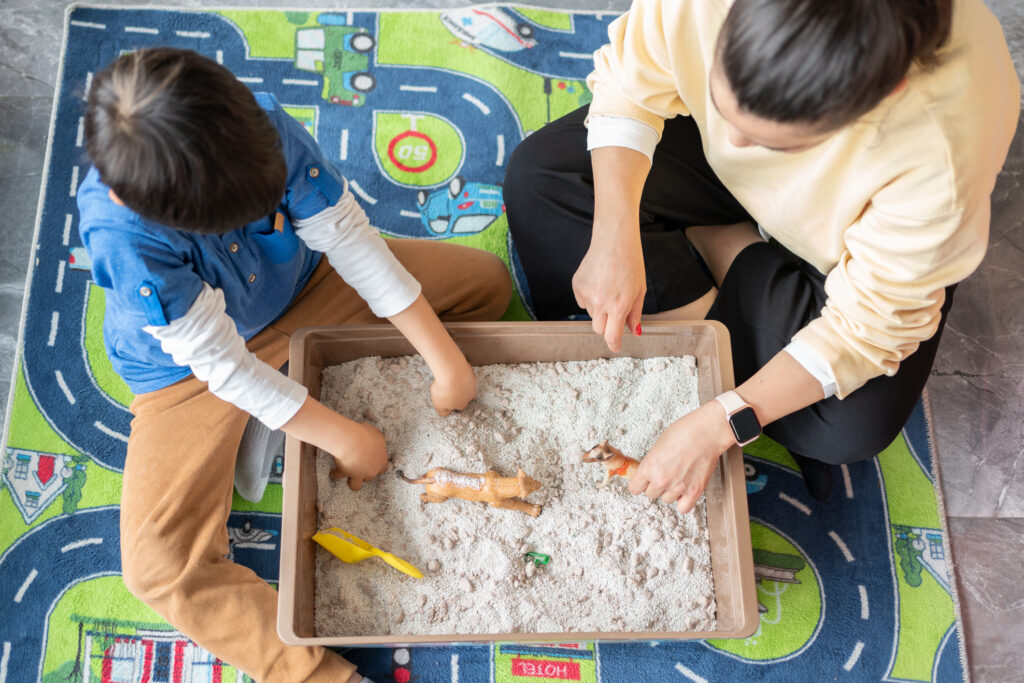
For example, a child who struggles with loud sounds might begin with games that include gentle noises. A child sensitive to textures might explore bins filled with soft fabrics, rice, or water beads to build comfort at their own pace. Parents are included as active partners in the process. This collaboration helps families carry over what children learn in therapy into their daily routines at home, during school activities, and in the community.

Benefits of Pediatric Occupational Therapy for Sensory Processing
With support from occupational therapy, children with sensory processing difficulties can:
- Build confidence in new situations
- Improve focus and participation in school
- Expand food and clothing tolerances
- Develop better self-regulation skills
- Enjoy daily routines and play with fewer struggles
Our goal is to help each child feel comfortable, capable, and confident as they interact with the world around them.
Getting Started with Sensory Support at Let’s Communicate
If your child shows signs of sensory processing difficulties, you are not alone. With the right strategies, children can learn to manage sensory input and thrive in everyday activities. At Let’s Communicate, our team is here to guide you with compassion and expertise.
Contact us today to schedule an evaluation and learn how pediatric occupational therapy can support your child’s growth and independence.