

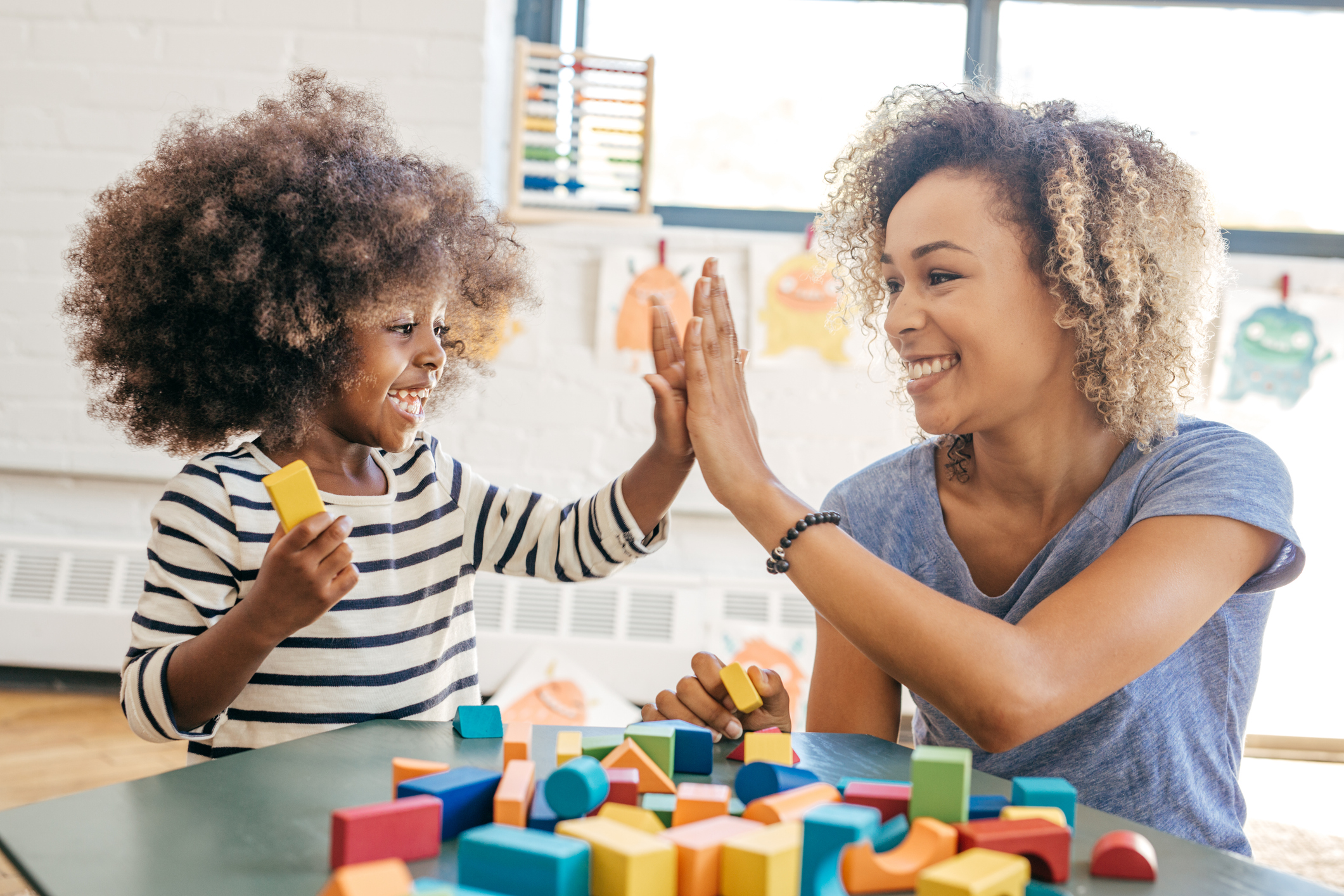
Every child develops movement skills at their own pace, but practice makes all the difference. When your child jumps, crawls, climbs, or tosses a ball, they’re not just playing—they’re developing the coordination, balance, and control that support every stage of growth.
These motor skills are what allow your child to explore, learn, and become more independent in the world around them. Keep reading to learn what motor skills are and how you can help your child strengthen them at home through play.
What Are Motor Skills?
Motor skills are the abilities that help your child move and control their body. They can be grouped into two main categories:
- Gross motor skills involve large body movements, such as walking, running, climbing, and jumping. These help children build strength, stability, and endurance.
- Fine motor skills involve small, detailed movements, like holding a crayon, buttoning a shirt, or using utensils. These skills require hand-eye coordination and control.
Both types of motor skills work together to support your child’s independence and confidence. With a little creativity, you can encourage both kinds of movement through simple activities at home.
Fun Activities to Help Your Child Improve Their Motor Skills
Here are fun, easy ways you can support your child’s motor development right at home:
1. Create a Living Room Obstacle Course
Use pillows, chairs, or painter’s tape to create a mini obstacle course. Invite your child to climb over, crawl under, or balance across each section. This encourages gross motor coordination, strengthens core and leg muscles, and teaches problem-solving as they figure out how to navigate each “challenge.”
- For toddlers: Keep it simple—crawl through tunnels made from cardboard boxes.
- For older kids: Add time challenges or have them design the course themselves.
2. Play Catch, Toss, and Roll
Ball games are excellent for hand-eye coordination, timing, and balance. Start with rolling a soft ball back and forth on the floor for younger children, then progress to tossing, catching, and aiming for targets as your child gets better at the game.
You can vary the game by:
- Using balloons for slower movement
- Trying different sizes and textures of balls
- Incorporating challenges like standing on one foot while catching
3. Get Creative with Arts and Crafts
Cutting paper, stringing beads, using playdough, and coloring all strengthen fine motor control. These activities help children build the small-muscle strength and dexterity they’ll need later for handwriting and self-care tasks like zipping and buttoning. Encourage independence by letting your child make their own creations—even if it gets messy!
4. Encourage Crawling and Climbing Play
Crawling is great for building core strength and coordination, even in preschoolers and early elementary kids. Create fun games like “animal walks” or “tunnel crawls” to encourage your young child to crawl and play.
For older children, climbing playground equipment, indoor play structures, or even safely scaling cushions at home helps develop their balance, confidence, and body awareness.
5. Dance to Music
Turn on your child’s favorite songs and have a dance party! Dancing strengthens the whole body and improves rhythm, coordination, balance, and endurance.
Encourage creative movement by calling out actions like “hop like a frog,” “spin like a top,” or “tiptoe like a ballerina.” Music adds motivation and helps children connect movement with timing and listening skills. Plus, it’s fun!
6. Practice Everyday Chores Together
Simple household tasks can double as motor-skill practice. These activities also teach responsibility and self-confidence while strengthening gross and fine motor abilities. You can try:
- Wiping tables or windows builds arm strength.
- Carrying laundry or groceries improves coordination and balance.
- Pouring water into cups develops hand control.
7. Go for Nature Walks
Walking on grass, sand, or uneven trails challenges your child’s balance and coordination in ways that flat indoor surfaces can’t. On your walk, invite them to:
- Step over small obstacles like sticks or puddles
- Squat to pick up leaves or stones
- Throw pebbles into a pond or bucket to practice aim
8. Build With Blocks or LEGO® Sets
Stacking, connecting, and balancing blocks strengthens spatial awareness and finger dexterity. Building challenges also encourage problem-solving and creativity. For a twist, challenge your child to build a tower as tall as possible or copy a model you create first.
Reach Out to Let’s Communicate for Expert Support
At Let’s Communicate Pediatric Therapy Services, our licensed therapists make movement fun and goal-oriented for children from birth through age 21. We help kids develop the motor skills they need to move, play, and thrive—one joyful step at a time.
If you’ve noticed your child struggles with coordination, balance, or strength, pediatric physical therapy can help. To learn more or schedule an evaluation, call (678) 963-0694 today.
