

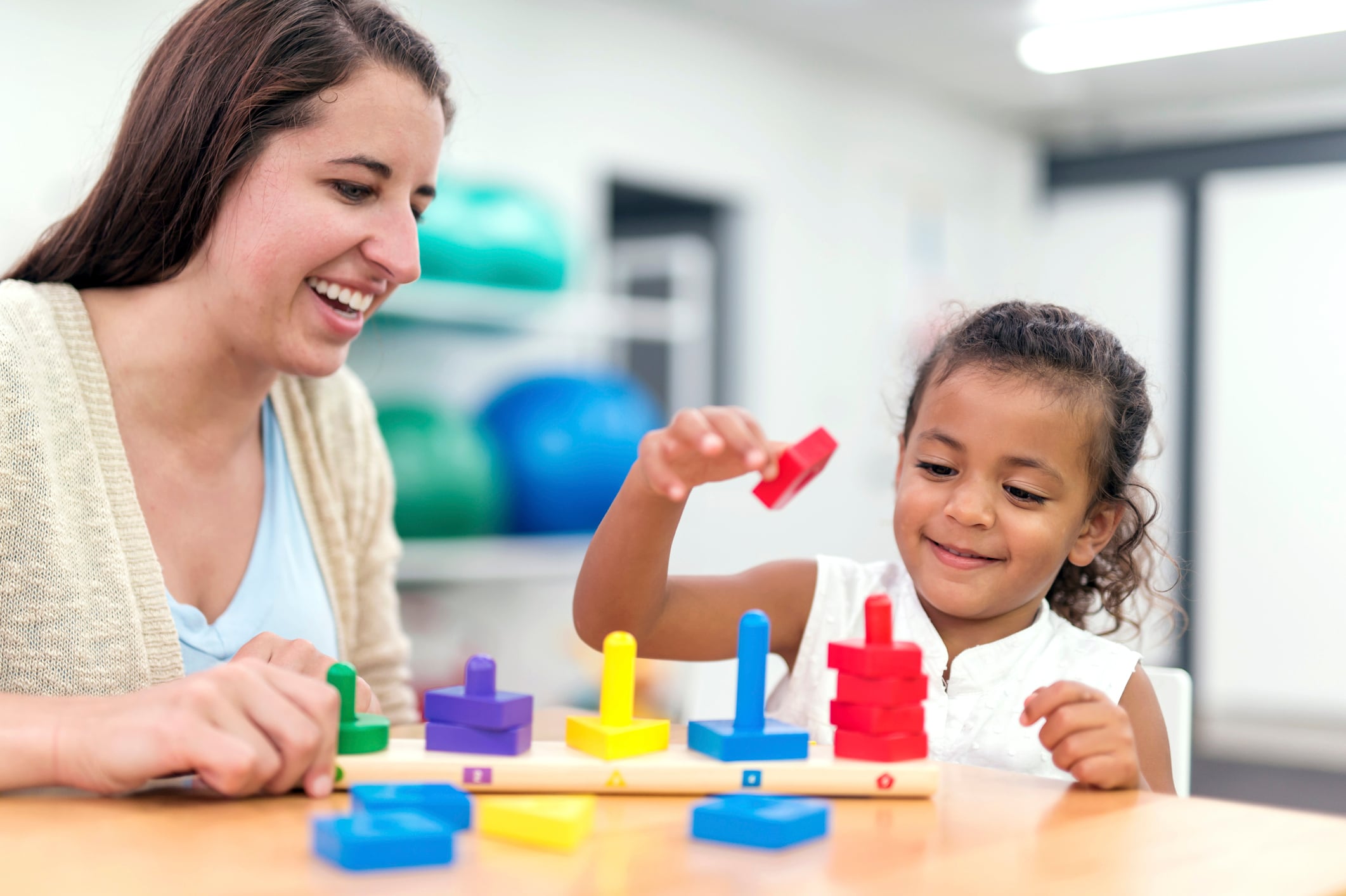
If you’ve ever walked into a pediatric therapy session and seen your child building a Lego tower, navigating an indoor obstacle course, or playing with bubbles, you might find yourself wondering: Is this really therapy?
Yes, it really is therapy. Pediatric therapists use play because it is the natural way your child explores the world, solves problems, and builds new abilities.
Why Play-Based Therapy Works So Well
Play-based therapy is widely used in pediatric care because it supports learning in a way that aligns with how your child’s brain develops. When your child is engaged in play, they are more motivated, less pressured, and better able to absorb new skills.
Play-based therapy is effective because it allows your child to:
- Stay engaged longer than they might during repetitive or drill-based activities
- Feel safe trying challenging skills without fear of failure
- Build confidence through meaningful successes during play
- Use new skills more naturally in everyday situations
What Skills Can a Child Build Through Play?
While play-based therapy may look like simple games, each activity is intentionally selected by a trained therapist to support specific developmental goals. These play-based methods are backed by research and designed to help your child practice important skills in a way that feels natural and engaging.
Through activities chosen specifically for your child’s needs and age, your child builds real-life skills that support success at home and at school, such as:
- Following directions: Learning the rules of a game helps improve listening and focus
- Communicating needs: Using gestures or words to ask for a specific toy or to keep a game going
- Managing emotions: Learning how to handle frustration when a tower falls or how to wait for a turn
- Building independence: Practicing starting tasks, making choices, and following through during play
- Strengthening the body: Using swings or climbers to improve balance, coordination, and body awareness
- Developing fine motor skills: Using puzzles or playdough to strengthen the small hand muscles needed for writing and self-care
What Play-based Therapy Might Look Like
Because every child is unique, each therapy session is tailored to your child’s individual needs, interests, and developmental stage. Examples of what play-based therapy may look like include:
- Playing board and turn-taking games to support attention, rule-following, emotional regulation, and patience
- Using puppets to practice conversation skills, such as turn-taking, listening, and responding to others
- Building with blocks or Legos to support planning, coordination, and frustration tolerance
- Doing arts and crafts activities such as cutting, coloring, or gluing to strengthen hand coordination and control
- Singing interactive songs or reciting rhymes to encourage language development and practice clear speech
- Using pretend play to practice daily routines, such as guiding a doll through the steps of getting ready for school, including brushing teeth, getting dressed, and eating breakfast
- Sorting and matching items, like shapes, colors, or pictures, to support focus, visual skills, and early problem-solving
How Therapy Grows with Your Child
During therapy sessions, your child’s therapist carefully observes how they respond and adjusts the level of challenge to keep activities engaging without becoming frustrating.
By subtly changing the rules, materials, or level of support, the therapist ensures that play continues to support your child’s specific goals. This guidance helps your child stay motivated and successful while building skills that continue to develop as they grow.
Reach Out to Let’s Communicate for Support
If you’d like to know if your child could benefit from play-based therapy and you are in the Winder, GA area, call Let’s Communicate Pediatric Therapy Services at (678) 963-0694 or fill out our online contact form to schedule an evaluation. We’d love to help your child learn, grow, and thrive through the power of play.
