

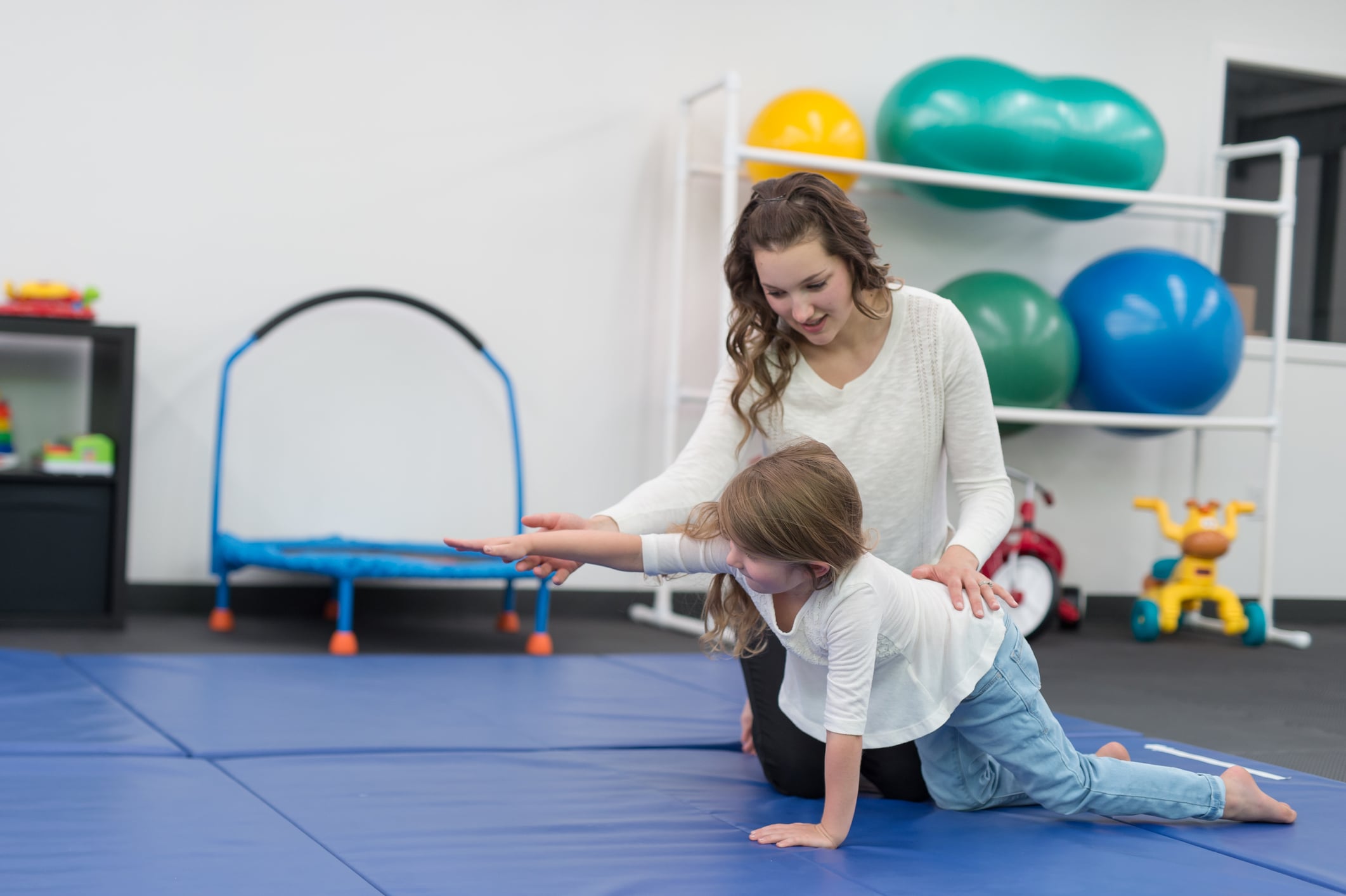
Does your child seem to trip often, bump into things, or struggle with activities like running, climbing, or jumping? What may be commonly described as “clumsiness” may actually be a sign that your child’s gross motor skills need a little extra support.
Gross motor skills rely on the large muscle groups in the body and help your child move with control and coordination. When these skills are still developing, your child may feel unsteady during play, hesitate to try new activities, or struggle to keep up with their peers.
By understanding and addressing gross motor delays, you can help your child build the strength and coordination they need to move confidently and participate more fully in everyday activities.
What Are Gross Motor Skills?
Gross motor skills involve the large muscles in the arms, legs, and core. These are the muscles that allow your child to walk, run, climb, and balance. As your child grows, these skills develop through constant movement and play.
Sometimes, when these skills are still developing, movements that require coordination or balance take more effort. A child may appear unsteady, trip more often, or hesitate during physical activities as they work to control their movements.
The Relationship Between Clumsiness and Gross Motor Skills
What appears as clumsiness is often a sign that your child’s gross motor skills are still developing, particularly in areas like balance, coordination, and motor control:
- Balance helps your child stay steady while standing, walking, running, or jumping. As balance improves, your child feels more secure during movement and more confident trying new activities.
- Coordination allows different parts of the body to work together smoothly. This is what helps your child catch a ball, navigate obstacles, and move through space more easily.
- Motor control helps your child perform movements with greater accuracy and consistency. As this skill improves, movements become more automatic, allowing your child to participate more naturally in play.
Improving these skills does more than support movement. It helps your child feel more comfortable in their body and more confident joining in everyday activities with others.
How Physical Therapy Helps Strengthen Gross Motor Skills
If your child needs extra support developing balance, coordination, or strength, pediatric physical therapy can help.
A physical therapist evaluates your child’s movement patterns to identify where they may need more strength, stability, or control. From there, they create a personalized, play-based therapy plan designed to support your child’s development.
Therapy activities may include:
- Balance activities such as walking on balance beams or stepping across low obstacles to help your child feel more steady during movement
- Coordination games that encourage both sides of the body to work together, such as catching, kicking, climbing, or navigating obstacle courses
- Strength-building activities that improve endurance and help your child keep up with play and daily routines
- Guided movement practice to help your child develop more controlled and confident movement patterns
As these skills improve, your child gains the confidence to move more freely, participate in activities with peers, and enjoy play without hesitation.
Reach Out to Let’s Communicate for Support
If you’d like to learn how pediatric therapy can help improve your child’s strength, coordination, and confidence, and you are in the Winder, GA, area, reach out to Let’s Communicate Pediatric Therapy Services. Call us at (678) 963-0694 or fill out our online contact form to schedule an evaluation.
