

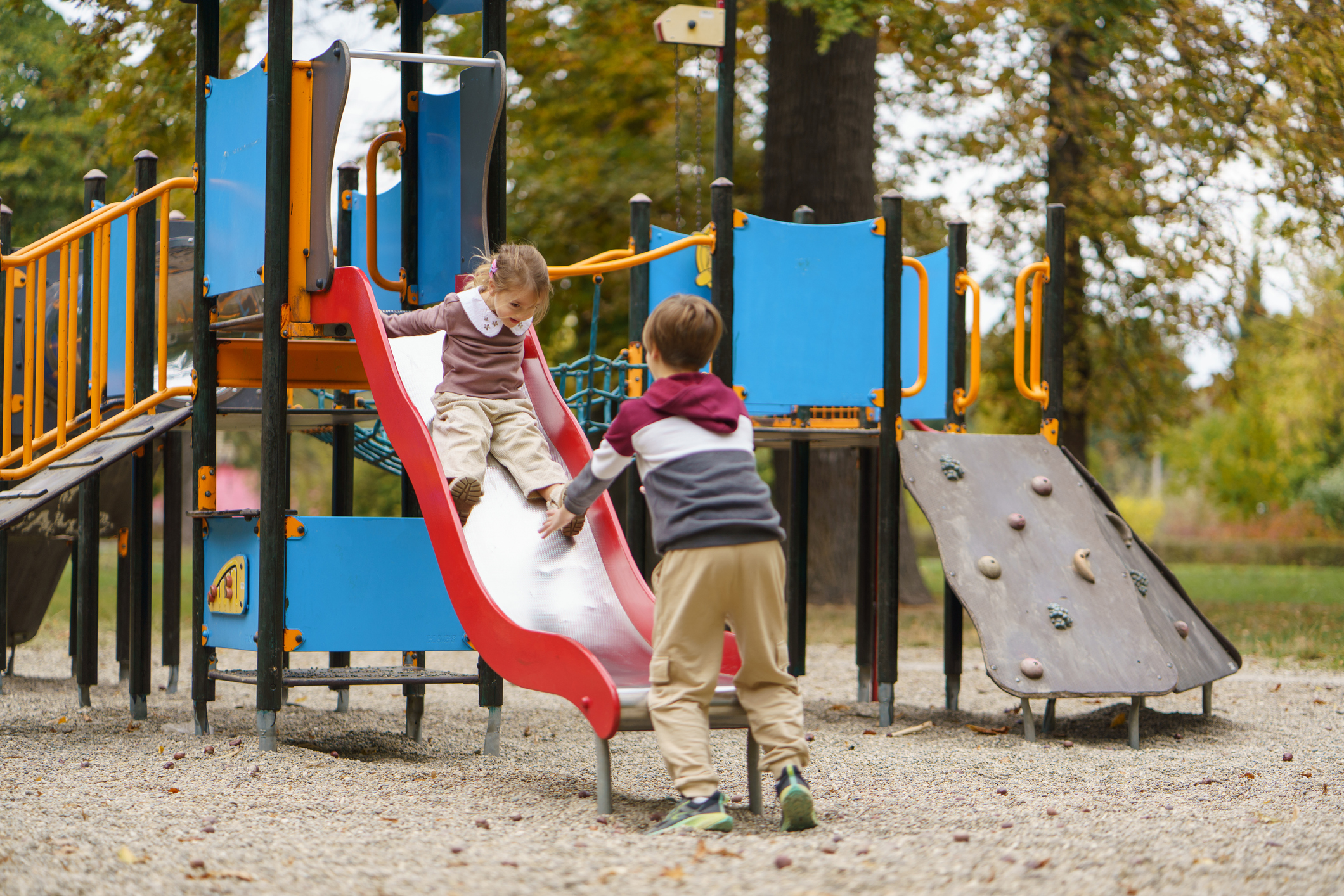
Playgrounds are supposed to be fun. They’re places where children climb, swing, run, and explore. But for some children, playgrounds feel overwhelming instead of exciting. If your child hesitates near equipment, prefers to watch from the sidelines, or becomes upset when it’s time to play, you may wonder why.
Many parents assume their child is simply shy or cautious. In reality, playground avoidance is often connected to physical skills that are still developing. The good news is that, with the right support, children can build the strength and confidence they need to enjoy active play.
Why the Playground Can Feel Challenging
To adults, playground equipment can look simple. To children, it requires many physical skills happening all at once. Climbing a ladder, balancing on a beam, or pumping a swing all demand coordination, strength, balance, and body awareness.
When these skills feel difficult, the playground can feel intimidating rather than fun. Avoidance is often a child’s way of protecting themselves from falling, failing, or feeling unsure of their body.
The Physical Skills Behind Playground Play
Playground activities rely on strong gross motor skills, which involve the large muscles of the body. These skills allow children to move confidently and safely during physical play.
Children use gross motor skills to run, jump, climb, balance, and move their bodies through space. They also rely on core strength and coordination to stay stable while trying new movements. If these skills are still developing, playground equipment can feel unpredictable and even scary.
Balance and body awareness also play a big role. Children need to understand where their body is in space and how to control their movements. Without this awareness, activities like climbing high structures or walking across narrow surfaces can feel overwhelming.
How Physical Therapy Builds Playground Confidence
Physical therapy helps children strengthen the exact skills needed for playground play in a supportive, encouraging environment.
Our therapy sessions are designed to feel like play, but each activity has a purpose. Children work on strength, coordination, balance, and motor planning through fun movement-based activities. Over time, these skills translate directly to playground equipment.
As children gain strength and stability, they begin to trust their bodies more. That growing trust often leads to increased confidence during physical play.
Signs Your Child May Benefit from Physical Therapy
Some children benefit from extra support developing the physical skills needed for active play. You might notice your child:
- Avoids climbing or swinging
- Tires quickly during play
- Falls more often than peers
- Seems hesitant when trying new physical activities
These signs don’t mean something is wrong. They simply mean your child may need extra support building foundational motor skills.
How to Support Playground Skills at Home
You can gently encourage physical confidence outside of therapy. Visiting quieter playgrounds during less busy times can help your child explore without feeling rushed.
Simple activities at home, like climbing stairs, jumping on pillows, or balancing on a line of tape on the floor can also strengthen important movement skills in a safe way.
Most importantly, celebrate small wins. Trying a new piece of equipment or climbing one extra step are meaningful steps toward greater confidence.
Reach Out to Let’s Communicate for Physical Therapy Support
At Let’s Communicate Pediatric Therapy Services, we love helping children build the strength, coordination, and confidence they need to move, play, and explore the world around them.
If your child avoids playgrounds or struggles with physical play, call (678) 963-0694 today to schedule an evaluation. Together, we’ll help your child grow more confident with every step.
