

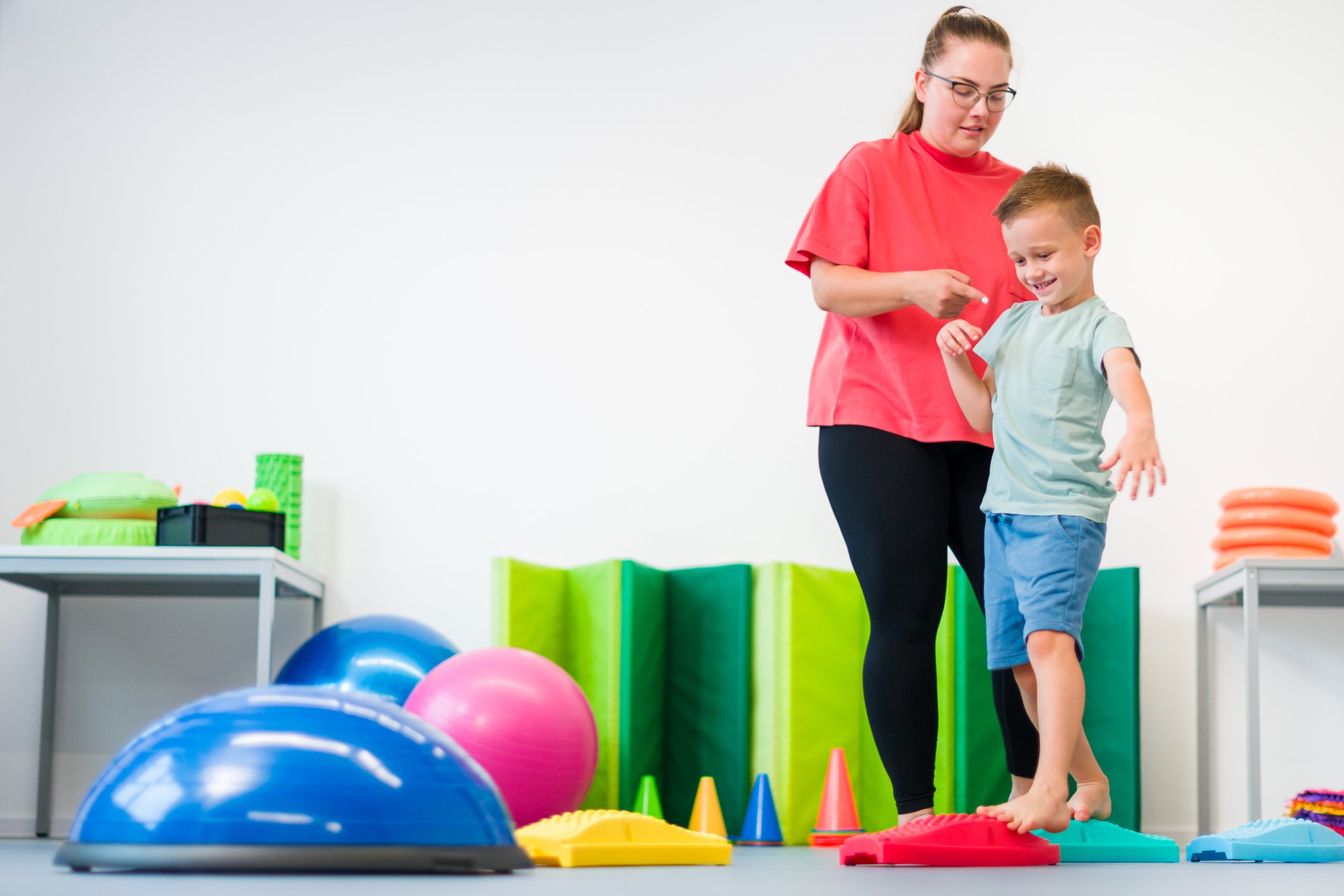
When a child gets hurt (whether from a sports activity, playground fall, or accident), it can limit their ability to play, move, and participate in the activities they love most. That’s where pediatric physical therapy comes in.
Physical therapy (PT) helps children heal safely, regain their strength and mobility, and return to their daily routines with confidence. Our approach is gentle, playful, and always adapted to each child’s unique needs. Keep reading to find out how we can help your child recover and thrive after an injury.
Why Children Need Specialized Physical Therapy
Children aren’t just “small adults.” Their bodies are still growing, which means their muscles, bones, and joints respond differently to injury and healing. Pediatric physical therapists are specially trained to understand these differences.
Therapy sessions look more like play than a workout because kids learn and heal best when they’re having fun. Through engaging, playful techniques, we help children:
- Recover safely from sprains, fractures, or muscle strains
- Rebuild strength and coordination after surgery or casting
- Regain mobility after long periods of rest or immobilization
- Prevent future injuries by improving balance and body mechanics
How PT Supports Healing After an Injury
Each child’s recovery plan is individualized, but most pediatric physical therapy programs share common goals: restoring strength, mobility, and confidence. Here’s how it works:
1. Reducing Pain and Swelling
After an injury, children may experience soreness, stiffness, or swelling that limits their movement. Our therapists use gentle techniques like stretching, massage, or guided motion to improve circulation and relieve discomfort to help your child move more easily without pain.
2. Restoring Range of Motion
When a joint or muscle has been injured, it may feel tight or difficult to move. PT helps restore normal movement through guided exercises that gradually increase flexibility and strength. This prevents long-term stiffness or favoring of one side of the body.
3. Rebuilding Strength and Endurance
Muscles often weaken during rest or recovery, especially after wearing a cast or brace. Through fun, targeted activities like obstacle courses, climbing games, or balance challenges, our therapists help children rebuild strength in a way that feels natural and engaging.
4. Preventing Reinjury
We don’t just focus on recovery! We also teach children how to move safely going forward. This might include learning proper posture, stretching routines, or strengthening exercises to protect their vulnerable joints or muscles.
Common Injuries That Benefit from PT
Even mild injuries can sometimes cause lingering weakness or stiffness. But early intervention helps prevent those challenges from turning into long-term limitations. Our pediatric physical therapists can support a wide range of injuries and conditions, including:
- Sprains and strains
- Fractures or broken bones after casting
- Sports-related injuries (ankle, knee, or shoulder)
- Post-surgical recovery
- Overuse injuries from repetitive motion
What to Expect During Your Child’s Recovery
Every child’s healing process is different. Some recover in just a few weeks, while others may need longer-term support. Our physical therapists will guide you through the process, provide exercises to practice at home, and do progress checks along the way.
Parents often notice improvements not only in their child’s strength and mobility, but also in their confidence, mood, and willingness to move again. That emotional peace (feeling safe and capable) is just as important as physical healing.
Reach Out to Let’s Communicate for Expert Support
At Let’s Communicate Pediatric Therapy Services, our expert physical therapists work with children from birth through age 21 to support recovery from injuries of all kinds.
If your child is recovering from an injury or still struggling to get back to normal activity, call (678) 963-0694 today to schedule an evaluation. Together, we’ll help your child rebuild strength, regain confidence, and return to doing what they love most.
