

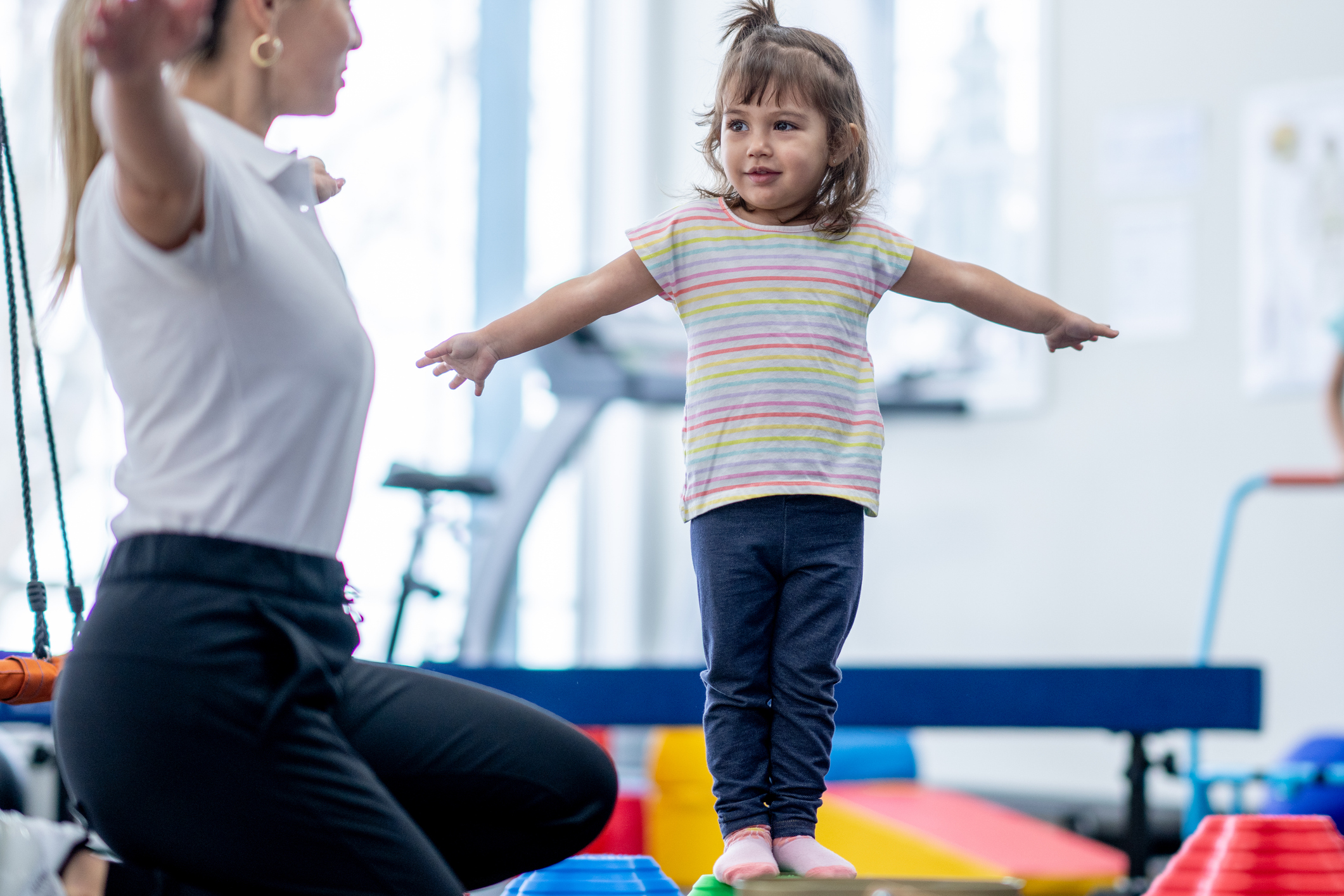
All children move and grow at their own pace; but if you’ve noticed that your child seems unusually unsteady, clumsy, or easily tired during play, it might be a sign that they need a little extra support.
Balance and coordination are the foundation of almost every skill your child develops, from learning to walk and run, to writing neatly or climbing on the playground. Pediatric physical therapy (PT) helps children strengthen these foundations for smooth and confident movement.
How can you tell if your child needs PT to build these skills? Here are five common signs to watch out for.
1. Frequent Tripping or Falling
It’s normal for toddlers to tumble as they learn new skills; but frequent tripping, falling, or bumping into things beyond the preschool years can signal difficulty with balance or motor planning (the ability to plan and coordinate body movements).
You might notice your child:
- Trips over their own feet or objects on the floor
- Has trouble walking on uneven surfaces
- Loses balance when turning or changing direction
- Seems hesitant on stairs or playground equipment
Our pediatric PTs can evaluate your child’s gait (walking pattern), coordination, and strength to determine what’s causing the instability and create fun, play-based activities to improve their balance and confidence.
2. Trouble Sitting Upright or Maintaining Posture
If your child slouches frequently, leans on furniture, or lies down during seated activities, it might not be laziness—it could be a sign of weak core muscles. The core (the muscles of the abdomen, back, and hips) supports nearly every movement the body makes.
Children with reduced core strength often:
- Struggle to sit upright at school or during meals
- Tire easily during seated work
- Rest their heads or arms on the table
- Have little endurance during fine motor tasks like writing or coloring
Physical therapy helps strengthen the core muscles to improve posture through playful, age-appropriate exercises like obstacle courses, climbing, or stability games.
3. Difficulty with Running, Jumping, or Catching
Every child develops at their own pace, but some experience delays or reduced muscle activation in their core for a variety of reasons, including:
If your child avoids physical play or gets frustrated during sports, it could be a sign of coordination or motor control challenges. These can appear as:
- Running with uneven steps or little arm movement
- Trouble catching or throwing a ball
- Difficulty hopping on one foot or skipping
- Avoiding activities that require balance or coordination
PT sessions focus on improving the communication between the brain and body to help your child move more efficiently and confidently. Our therapists use games that look like regular play to build underlying strength and coordination
4. Trouble With Balance During Daily Activities
Balance is something most children develop naturally through play—but when a child’s balance system isn’t keeping up, simple activities like walking on a curb or stepping into pants can become hard work.
You might see your child:
- Struggling to stand on one foot while dressing
- Swaying when standing still
- Falling over easily during turns or stops
- Preferring to hold onto walls, chairs, or people for support
Our physical therapists can test your child’s balance in a safe, structured setting and help strengthen both the muscles and sensory systems that control it.
5. Avoiding Movement or Fatiguing Quickly
Sometimes, children with balance or coordination challenges appear less active. It’s not because they don’t want to play, but because movement feels tiring or uncomfortable. If your child often says they’re “too tired” to run or avoids playground activities, it could point to low muscle tone or limited endurance. They may:
- Choose seated play more often than active play
- Struggle to keep up with peers in physical games
- Seem easily fatigued after short bursts of activity
Pediatric PT helps improve stamina through gradual, motivating exercises that match your child’s current abilities and build strength over time.
Reach Out to Let’s Communicate for Expert Support
If any of these signs sound familiar, or if your child’s movement seems unusually difficult for their age, a physical therapy evaluation can provide helpful insight. And early support can make a big difference in building the lifelong skills your child needs for movement and confidence.
At Let’s Communicate Pediatric Therapy Services, our expert physical therapists work with children from birth through age 21 to build these vital skills through fun, play-based activities. To learn more or schedule an evaluation, call (678) 963-0694 today.
